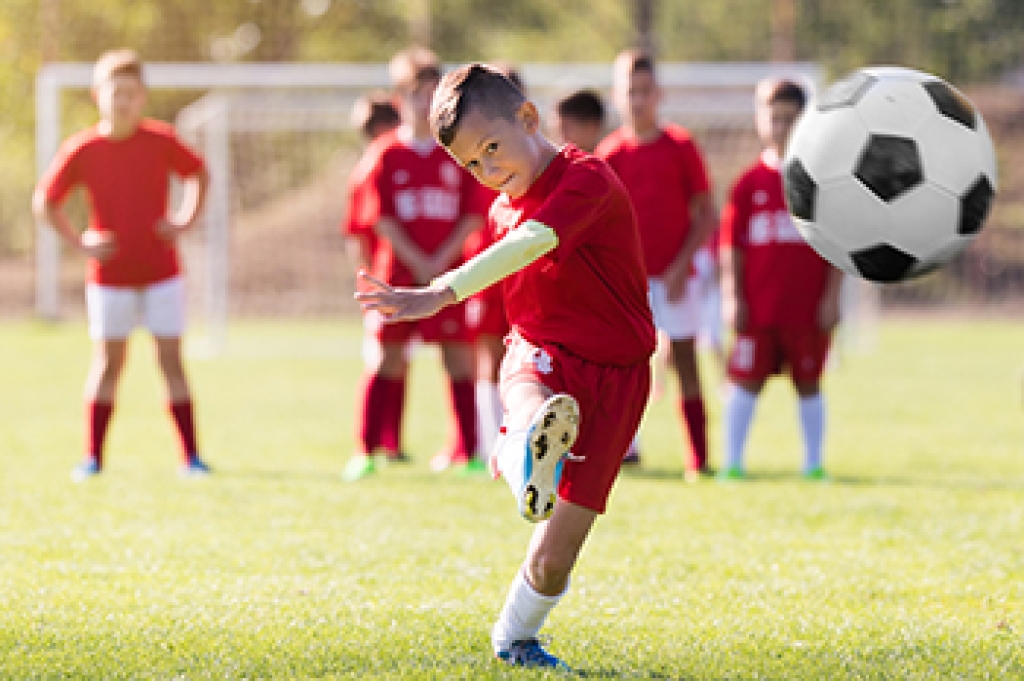
Soccer places heavy demands on growing feet and ankles. Sudden stops, quick turns, and contact with other players create opportunities for injury. Repeated running also puts pressure on bones and tendons before young athletes finish growing. When the school soccer season begins, increased practice schedules sometimes expose problems that were less noticeable during a break. Parents and coaches should take complaints of foot or ankle pain seriously. A child who limps or struggles to wear cleats needs an evaluation. Playing through pain risks worsening an injury and extending the time away from the field.
Ankle sprains occur when the strong bands that connect bones stretch or tear. A planted foot that twists during a change in direction puts these tissues at risk. Pain, swelling, and bruising frequently follow. However, a broken ankle sometimes causes similar symptoms, so appearance alone does not reveal the injury. Collisions or kicks also cause broken toes and fractures elsewhere in the foot. A podiatrist examines the painful area and checks joint stability. X-rays help identify broken bones and assess their position. Severe pain or an inability to bear weight requires prompt medical attention. An obvious deformity or open wound requires emergency care.
Other soccer injuries develop gradually from repeated stress. Stress fractures are small cracks in a bone that cause pain with activity and tenderness in a specific spot. Early X-rays sometimes fail to show these injuries, so a podiatrist might order additional imaging tests. Growing children also experience irritation where the Achilles tendon attaches near the heel's growth plate, an area of developing bone. This problem causes heel pain that worsens with running. Achilles tendinitis affects the tendon attaching the calf muscles to the heel. An examination helps distinguish among these problems and guides treatment that matches the child's age and diagnosis.
A podiatrist develops a treatment plan based on the injury's severity and the demands of soccer. A protective boot or cast limits movement while damaged structures heal. Certain displaced fractures or severe injuries require surgery to restore alignment or stability. In some cases, custom orthotics may be prescribed to redistribute pressure and improve support inside sports shoes. The podiatrist will evaluate cleat fit and identify movement patterns that contribute to repeated strain. Follow-up visits track healing and help determine when a gradual return to soccer is appropriate. Clearance depends on recovery, rather than the team's schedule. If your child has sustained foot or ankle injury from playing soccer, it is suggested that you schedule an appointment with a podiatrist for effective treatment solutions, allowing for a prompt return to play.
Sports related foot and ankle injuries require proper treatment before players can go back to their regular routines. For more information, contact Akena Wannamaker, DPM of ASW Foot and Ankle. Our doctor can provide the care you need to keep you pain-free and on your feet.
Sports Related Foot and Ankle Injuries
Foot and ankle injuries are a common occurrence when it comes to athletes of any sport. While many athletes dismiss the initial aches and pains, the truth is that ignoring potential foot and ankle injuries can lead to serious problems. As athletes continue to place pressure and strain the area further, a mild injury can turn into something as serious as a rupture and may lead to a permanent disability. There are many factors that contribute to sports related foot and ankle injuries, which include failure to warm up properly, not providing support or wearing bad footwear. Common injuries and conditions athletes face, including:
- Plantar Fasciitis
- Achilles Tendinitis
- Achilles Tendon Rupture
- Ankle Sprains
Sports related injuries are commonly treated using the RICE method. This includes rest, applying ice to the injured area, compression and elevating the ankle. More serious sprains and injuries may require surgery, which could include arthroscopic and reconstructive surgery. Rehabilitation and therapy may also be required in order to get any recovering athlete to become fully functional again. Any unusual aches and pains an athlete sustains must be evaluated by a licensed, reputable medical professional.
If you have any questions please contact our office located in Richmond, VA . We offer the newest diagnostic and treatment technologies for all your foot and ankle needs.
