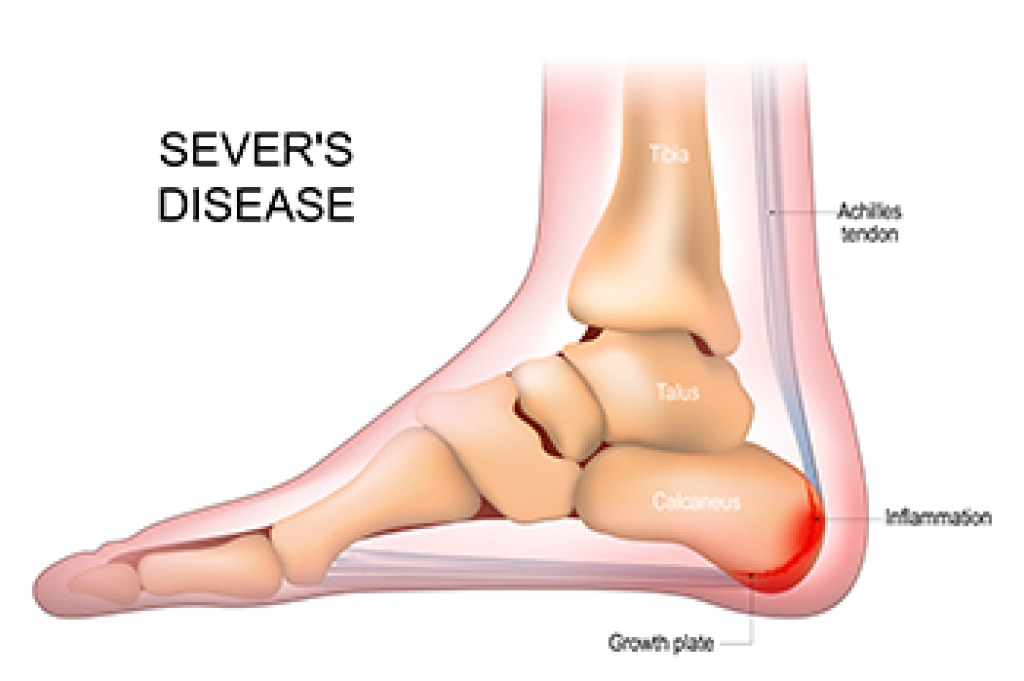
Sever’s Disease in Active Children

Sever’s disease is a heel condition that can affect children while their bones are still growing. It develops when repeated stress irritates the growth plate at the heel. The Achilles tendon attaches in this area and can place increased pulling force on the developing heel during activity. Symptoms include heel pain, tenderness, and discomfort after running or jumping. A child may also limp or avoid activities that put pressure on the heel.

This condition most affects active children during growth spurts, between 8 and 14 years old. Boys and girls can develop Sever’s disease. Children who participate in sports involving running and jumping may have greater risk because their heels experience impact. Tight calf muscles, increased sports participation, and limited recovery between activities can also contribute. Symptoms may become more noticeable when training intensity increases.


A podiatrist evaluates the child’s symptoms, activity level, and walking pattern. The provider may examine ankle flexibility and calf tightness to understand how stress is affecting the heel. Imaging is sometimes used when symptoms are unusual or another injury needs to be excluded. Treatment is usually conservative and focuses on reducing stress. Care may include activity modification, wearing supportive footwear and heel lifts. Follow-up visits help monitor improvement and adjust treatment.


Relief at home can begin by reducing activities that trigger pain and allowing recovery between active days. Supportive shoes can reduce strain, while gentle stretching may help improve calf flexibility when recommended. Children should not be encouraged to continuplayig sports through heel pain. Most children improve as the growth plate matures, but persistent symptoms require evaluation. If your active child has symptoms of Sever’s disease, it is suggested that you consult a podiatrist for effective relief and management solutions. 

Sever's disease often occurs in children and teens. If your child is experiencing foot or ankle pain, see Akena Wannamaker, DPM from ASW Foot and Ankle. Our doctor can treat your child’s foot and ankle needs.

Sever’s Disease

Sever’s disease is also known as calcaneal apophysitis, which is a medical condition that causes heel pain I none or both feet. The disease is known to affect children between the ages of 8 and 14.

Sever’s disease occurs when part of the child’s heel known as the growth plate (calcaneal epiphysis) is attached to the Achilles tendon. This area can suffer injury when the muscles and tendons of the growing foot do not keep pace with bone growth. Therefore, the constant pain which one experiences at the back of the heel will make the child unable to put any weight on the heel. The child is then forced to walk on their toes.

Symptoms

Acute pain – Pain associated with Sever’s disease is usually felt in the heel when the child engages in physical activity such as walking, jumping and or running.

Highly active – Children who are very active are among the most susceptible in experiencing Sever’s disease, because of the stress and tension placed on their feet.

If you have any questions, please feel free to contact our office located in Richmond, VA . We offer the newest diagnostic and treatment technologies for all your foot care needs.

Read more about Sever's Disease

Reminder: When Was the Last Time...?

Custom orthotics, or shoe inserts, should be periodically replaced. Orthotics must fit properly to give you the best results. Protect your feet and ankles!

Recognizing Clubfoot Symptoms and the Importance of Early Diagnosis

Clubfoot is a congenital foot condition that causes one or both feet to develop in an unusual position before birth. The foot typically points downward and turns inward, creating a noticeable difference in alignment. This condition affects the muscles, tendons, and bones of the foot and ankle. Although clubfoot may look concerning, early diagnosis and proper treatment can help many children achieve improved foot function and normal mobility.

Common symptoms of clubfoot include an inward-turning foot, a tight Achilles tendon, a smaller affected foot, and limited flexibility. The foot may appear stiff and difficult to move into a normal position. Without treatment, the child may develop an abnormal walking pattern as they grow. While clubfoot is not usually painful in babies, untreated cases can lead to long-term challenges with balance, footwear, and physical activity.


The causes of clubfoot are linked to abnormal development of the foot during pregnancy. Researchers believe genetic factors and changes in muscle or connective tissue development may contribute to the condition. Risk factors include having a family history of clubfoot and certain neuromuscular conditions. Clubfoot is one of the most common congenital foot conditions, but the exact reason it develops is not always clear.


Diagnosis begins with a detailed physical examination after birth. A podiatrist will assess the position and flexibility of the foot to determine the severity of the condition. Additional evaluations may be performed if needed to understand the structure of the foot. Early attention provides the best opportunity for improving alignment and preventing future complications. If your child has signs of clubfoot, it is suggested that you include a podiatrist on your health-are team to ensure healthy foot development. 

Congenital foot problems require immediate attention to avoid future complications. If you have any concerns, contact Akena Wannamaker, DPM of ASW Foot and Ankle. Our doctor can provide the care you need to keep you pain-free and on your feet.

Congenital foot problems are deformities affecting the feet, toes, and/or ankles that children are born with. Some of these conditions have a genetic cause while others just happen. Some specific foot ailments that children may be born with include clubfeet, polydactyly/macrodactyly, and cleft foot. There are several other foot anomalies that can occur congenitally. What all of these conditions have in common is that a child may experience difficulty walking or performing everyday activities, as well as trouble finding footwear that fits their foot deformity. Some of these conditions are more serious than others. Consulting with a podiatrist as early as possible will help in properly diagnosing a child’s foot condition while getting the necessary treatment underway.

What are Causes of Congenital Foot Problem?

A congenital foot problem is one that happens to a child at birth. These conditions can be caused by a genetic predisposition, developmental or positional abnormalities during gestation, or with no known cause.

What are Symptoms of Congenital Foot Problems?

Symptoms vary by the congenital condition. Symptoms may consist of the following:

  • Clubfoot, where tendons are shortened, bones are shaped differently, and the Achilles tendon is tight, causing the foot to point in and down. It is also possible for the soles of the feet to face each other.
  • Polydactyly, which usually consists of a nubbin or small lump of tissue without a bone, a toe that is partially formed but has no joints, or an extra toe.
  • Vertical talus, where the talus bone forms in the wrong position causing other bones in the foot to line up improperly, the front of the foot to point up, and the bottom of the foot to stiffen, with no arch, and to curve out.
  • Tarsal coalition, when there is an abnormal connection of two or more bones in the foot leading to severe, rigid flatfoot.
  • Cleft foot, where there are missing toes, a V-shaped cleft, and other anatomical differences.
  • Macrodactyly, when the toes are abnormally large due to overgrowth of the underlying bone or soft tissue.

Treatment and Prevention

While there is nothing one can do to prevent congenital foot problems, raising awareness and receiving neonatal screenings are important. Early detection by taking your child to a podiatrist leads to the best outcome possible.

If you have any questions, please feel free to contact our office located in Richmond, VA . We offer the newest diagnostic and treatment technologies for all your foot care needs.
Read more about Congenital Foot Problems

Understanding the Cause of Cuboid Syndrome

Cuboid syndrome affects one of the small bones on the outer side of the foot called the cuboid. This bone helps support normal foot movement and works with nearby joints while walking. Cuboid syndrome develops when the cuboid bone shifts slightly out of its normal position or the surrounding tissues become irritated. This problem can happen after an ankle sprain or repeated stress from sports and other physical activities. Wearing shoes that lack proper support also can increase stress on the foot. Pain usually develops along the outer side of the foot and becomes worse while walking or standing. Some patients notice weakness, tenderness, or difficulty pushing off the foot. The pain can resemble other foot conditions, making a professional evaluation important.

A podiatrist performs a detailed examination to determine whether cuboid syndrome is causing the pain. The evaluation includes checking the location of the discomfort, the movement of the foot, and the stability of the surrounding joints. The podiatrist also watches how the patient stands and walks because changes in movement can place extra stress on the cuboid bone. Imaging tests, like X-rays or MRI scans, help rule out fractures and other conditions that cause similar symptoms. Although these tests do not always confirm cuboid syndrome, they provide valuable information when making a diagnosis. Identifying the correct source of pain allows the podiatrist to recommend the most effective treatment.

Treatment focuses on restoring normal foot function and reducing stress on the injured area. A podiatrist can gently reposition the cuboid bone when it has shifted from its normal alignment. Care also includes custom orthotics that improve foot support and reduce pressure on the outer side of the foot. Stretching and strengthening exercises help improve stability and lower the chance of repeated problems. Patients with ongoing pain are evaluated for other foot conditions that could require additional treatment. If you have symptoms of cuboid syndrome, it is suggested that you schedule an appointment with a podiatrist for a diagnosis and appropriate treatment.

Cuboid syndrome, also known as cuboid subluxation, occurs when the joints and ligaments near the cuboid bone in the foot become torn. If you have cuboid syndrome, consult with Akena Wannamaker, DPM from ASW Foot and Ankle. Our doctor will assess your condition and provide you with quality foot and ankle treatment.

Cuboid syndrome is a common cause of lateral foot pain, which is pain on the outside of the foot. The condition may happen suddenly due to an ankle sprain, or it may develop slowly overtime from repetitive tension through the bone and surrounding structures.

Causes

The most common causes of cuboid syndrome include:

  • Injury – The most common cause of this ailment is an ankle sprain.
  • Repetitive Strain – Tension placed through the peroneus longus muscle from repetitive activities such as jumping and running may cause excessive traction on the bone causing it to sublux.
  • Altered Foot Biomechanics – Most people suffering from cuboid subluxation have flat feet.

Symptoms

A common symptom of cuboid syndrome is pain along the outside of the foot which can be felt in the ankle and toes. This pain may create walking difficulties and may cause those with the condition to walk with a limp.

Diagnosis

Diagnosis of cuboid syndrome is often difficult, and it is often misdiagnosed. X-rays, MRIs and CT scans often fail to properly show the cuboid subluxation. Although there isn’t a specific test used to diagnose cuboid syndrome, your podiatrist will usually check if pain is felt while pressing firmly on the cuboid bone of your foot.

Treatment

Just as the range of causes varies widely, so do treatments. Some more common treatments are ice therapy, rest, exercise, taping, and orthotics.

If you have any questions, please feel free to contact our office located in Richmond, VA . We offer the newest diagnostic and treatment technologies for all your foot care needs.

Read more about All About Cuboid Syndrome
scroll to top